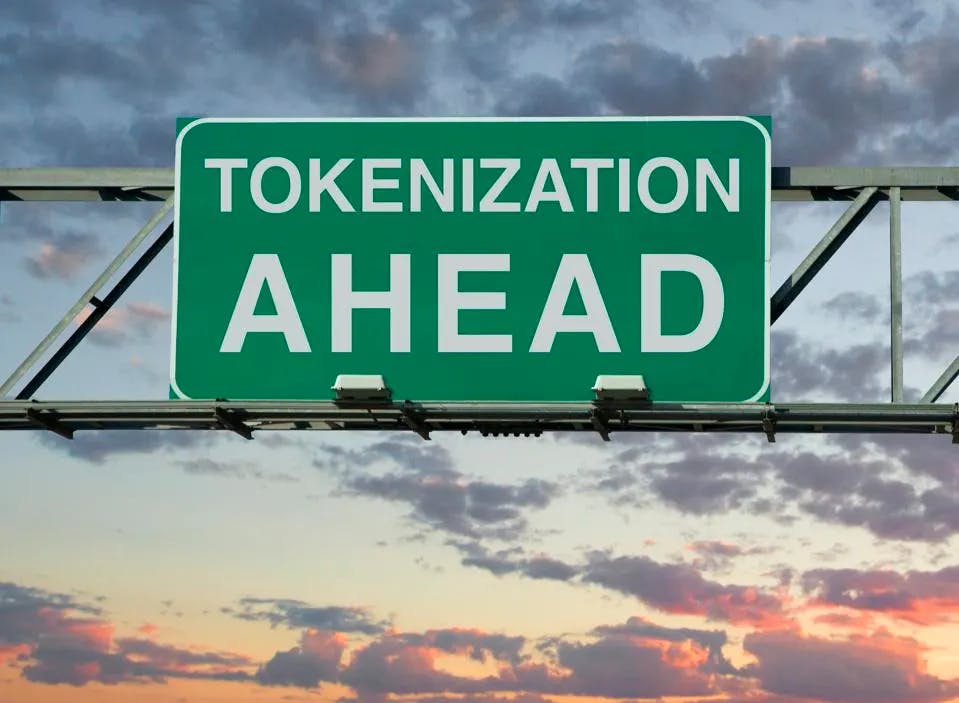
It’s easy to miss a structural shift when it happens in silence. No crash and no “end of the old guard” proclamations. Just the slow, methodical migration of the world’s largest financial institutions, BlackRock, Fidelity, and State Street, onto blockchains. The headlines haven’t caught up, but the infrastructure is already changing. What’s taking shape beneath the surface is industrial-grade tokenization: real-world assets like trade documents, loans, and payment instruments rewritten as programmable, interoperable data.
Nowhere is this transformation more visible (or overdue) than in trade finance, where a $2.5 trillion gap still relies on faxes, paper trails, and reconciliation workflows that haven’t evolved since the 1970s (Global Trade Review, 2025). Capital routinely moves more slowly than the goods it finances. The system has long been too critical to fail and too complex to modernize, until now.
New infrastructure is stepping in, not to bypass existing systems, but to rebuild them from within. Co-founded in 2017 by Ritesh Kakkad and Atul Khekade, XDC Networkdelivers programmable, compliant infrastructure that integrates with existing legal, financial, and trade systems to address structural gaps in global commerce. The founders bring deep domain expertise: Ritesh in cloud architecture, fintech compliance, and blockchain scalability; Atul in building enterprise-grade networks, including the first fully legal production blockchain for Indian banks, now actively used and piloted by SWIFT. Together, they also launched XDC Ventures, a $125 million fund supporting the next wave of blockchain infrastructure. Before XDC, they co-founded Airnetz, a successful charter aviation venture.
Platforms like XDC function not only as a payment layer or document system but as a foundation for structuring and distributing tokenized trade instruments. More than a payment or document layer, XDC provides the infrastructure to issue receivables, invoices, and guarantees as digital assets embedded with metadata. These can be rated, priced, and packaged in line with fund-level underwriting criteria, then routed through a compliant, jurisdiction-aware system.
Tokenization = The New Foundation of Global Finance
Slowly but steadily, tokenization is changing how capital moves by simplifying the machinery beneath global finance. What once required a web of custodians, clearinghouses, and payment processors is now being restructured through distributed networks.
Tokenization enables financial instruments, such as invoices, bills of lading, and letters of credit, to become digital-native. Once on-chain, they can be tracked, verified, and settled directly, without the bottlenecks that traditionally slowed trade finance. With smart contracts, settlement becomes embedded in the asset itself. It compresses multi-day processes into seconds. It makes credit transparent and programmable. And it lays the groundwork for cross-border liquidity to move as freely as information. Tokenized assets offer built-in auditability and traceability, improving risk visibility and making these instruments more attractive to institutional investors.
Few networks illustrate this evolution better than the XDC Network. Purpose-built for trade and finance, XDC has already onboarded over $64.2 million in tokenized real-world assets across nine protocols, with issuers spanning commodities, supply chain credit, and private markets (TradeFi Network, 2025).
The Innovation of Hybrid Blockchains
When blockchain enters the conversation, it’s often framed as a binary: open, permissionless networks on one side; closed, bank-controlled consortia on the other. But large-scale trade finance doesn’t operate in binaries. It requires infrastructure that meets enterprise performance standards, aligns with global regulatory regimes, and still supports the programmability that makes tokenization transformative. Hybrid blockchains offer this middle ground (PwC, 2025). They’re designed to support permissioned access when necessary, provide public verifiability for audit and compliance, and integrate seamlessly with financial standards such as ISO 20022. Crucially, they are not layered on top of finance, but they are being integrated into its plumbing.
The XDC Network embraces exactly this architecture: it is EVM‑compatible, designed for enterprises, supports ISO 20022 messaging and trade document standards (e.g., MLETR), offers low-cost settlement, and is designed to work in regulated environments. As of November 2025, the network has processed ≈ 938 million transactions to date across 1.85 million addresses (XDCscan, 2025).
But beyond architecture lies the network effect: institutional validators, partnerships, trade-finance consortia. In other words, all the social and regulatory architecture required to move from pilot to adoption. Following its 2019 mainnet launch, XDC has matured into a high-performance Layer-1 protocol, engineered for enterprise use. It offers sub-cent transaction costs (<$0.0001), two-second finality, and a regulated, energy-efficient environment. With real-world asset tokenization projected to reach $16 trillion by 2030, XDC provides the infrastructure global finance is already moving toward (BCG, 2025).
Backed by validators like Deutsche Telekom and SBI Group, and integrated with trade consortia and funding platforms, XDC is already live in key corridors. The network’s protocol-level integration of Circle’s USDC extends native USD settlement across every connected workflow. Transactions benefit from legal enforceability, transparent documentation, and monetary stability, enabling real-time USD transfers across regions such as Singapore, the UAE, and Africa without FX exposure or reconciliation overhead.
Although a growing number of public blockchains now tout themselves as homes for tokenized finance, the approaches vary widely and often, so do the trade-offs. Solana, through its R3 partnership, offers speed and liquidity but faces questions on long-term stability and decentralization (R3, 2025). Polkadot’s modular approach allows parachains to tailor environments for specific RWA use cases, offering flexibility and native interoperability, but adds complexity and coordination overhead (Polkadot, 2025). But XDC takes a fundamentally different route Where others require add‑ons or bridges, XDC has built the infrastructure so that tokenized trade documents, credit instruments and cross‑border financial flows can operate within a regulatory‑aligned public blockchain environment: opening liquidity, institutional‑grade access and transparency in markets that were previously excluded.
The New Capital Pathways: Regulation-Ready Infrastructure for Global Credit
The question is no longer whether tokenization works, but whether it can operate within the regulatory frameworks that govern capital, credit, and cross-border risk. In the U.S., the proposed GENIUS Act aims to standardize how digital assets are classified and regulated, offering clarity for developers and investors alike. Europe is already ahead with MiCA (Markets in Crypto-Assets), a sweeping framework that defines token categories, enforces issuer disclosures, and licenses crypto service providers across the EU.
XDC’s alignment with the Trade Finance Distribution Initiative, which includes Lloyds and Standard Chartered, embodies the shift in how trade finance operates (TFD Distribution, 2025). Tradeteq’s integration with XDC enables credit instruments to meet regulatory underwriting standards and circulate across borders and capital pools once closed to SME trade finance, particularly in emerging markets, due to documentation friction and opacity. As co-founder Ritesh Kakkad puts it,
"The future belongs to ecosystems that connect compliance, technology, and community. That’s what XDC stands for."
Scaling the Unseen: What Comes After Crypto
Just as the internet standardized communication across borders, tokenized finance is creating a common language for trust, value, and settlement. That language is already being spoken across jurisdictions, by systems that no longer need to reconcile paper trails or translate outdated formats. Instead of breaking finance to rebuild it, this architecture translates it: into code, into compliance, into global liquidity. And for the first time in decades, trade finance isn’t the exception to innovation. It’s the proving ground.